The Social Dilemma
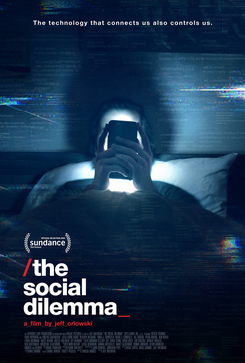 |
| Promotional Poster Copyright belongs to the film's distributor Image source: http://www.impawards.com/tv/social_dilemma.html |
The Power of Social Media
The internet has been a frontier for new forms of communication and connection. Now social media has become a permanent fixture in our daily lives and its influence is felt in nearly all daily activities. We can establish communities, enhance our knowledge, and even find lasting companionship through various social media platforms. However, all new frontiers come with inherent risks and pitfalls. Social media is very captivating and these companies are getting very rich off of its users. These themes are explored in the 2020 Netflix docu-drama The Social Dilemma. This is a film that looks to unpack the darker side of social media. Using a combination of testimonials, expert commentary, and dramatic reenactments, it delivers its message at a time when social media’s influence is undeniable.
What's the Message?
The Social Dilemma shares the downside of social media. In the last ten years social media usage has exploded, especially among young people. The testimonials from former employees of big social media companies all had something in common, that they quit due to unethical practices in their companies. The main concerns with social media include: harvesting user data, the spread of disinformation, and the negative psychological effects.
- User Data: One of the doctors in the film explained that humans have a biological imperative to connect with other people. Social media feeds that imperative and results in addiction. Having a healthy relationship with social media apps can be really hard for most people. The hearts, likes, and comments that we receive on social media posts sends reward signals to our brains and forces people into a cycle of seeking more of that popularity. The number of teen girls admitted for self harm started to really increase around 2010 which is when social media became available on mobile devices. Gen Z (kids born after 1996) is the first generation to be on social media in middle school. Young people are learning to use social media as a digital pacifier for when they are lonely, upset, or bored. The increased depression, anxiety, and lack of self confidence in teens is very concerning.
- Disinformation: The film drew parallels to the matrix, saying that users of social media are plugged into a system that is using us to make a profit. If the social media app you are using is free, then you are the product that is being sold (that is, your data). All user actions are being monitored and recorded in order to predict our actions and get the most of advertising revenue. These programs want to keep us on the app as long as possible and the algorithms know how to do that, making internet companies extremely rich. They've designed their programs to be addictive. One example is photo tagging, which is a feature you can find on Facebook. Every time that someone tags you in a photo you get an email. It's not a coincidence that the email does not include the photo (that would be very easy for them to do!). They want you to go into the app and check the photo. This kind of scheming is called growth hacking - engineers who hack psychology to get more sign ups, longer engagement in the app, etc.
- Psychological Effects: The film explores the "fake news" phenomenon of the coronavirus pandemic as well as the extreme political polarization that occurred surrounding the Trump election and presidency. Social media platforms make it extremely easy for extremists to spread their hate speech and gather followers. These extremists existed before social media existed but now theres a platform to easily spread their ideologies. People get different information from our Google searches depending on our location. Depending on where you live you might get different information from internet searches due to algorithms. As a result, an echo chamber is formed and it contributed to political divide and increased polarization.
So is there any hope? One subject claimed there needs to be a change in the law. A law could be created that would tax social media companies for exceeding a reasonable amount of user data. In my inexpert opinion this sounds like a great idea. There's no reason for companies to store mass amounts of user data and any time large, rich companies get taxed is a win in my book.
Another thing to be aware of is that one of the primary subjects of the the film is Tristan Harris, a former designer for Google who is the founder of the Center of Humane Technology. Humane is a company which is working to "reimagine the digital infrastructure." By spreading his message that social media companies are evil, Harris is promoting his own organization's mission. There is no doubt that the film is effective in scaring its viewers. Do we need to be cautious of social media platforms and work diligently to protect our health and our personal data? Absolutely. However the benefits of social media need to be acknowledged as well.
What Teachers Should Know
I think that this movie is worth watching for everyone but especially teachers and parents. Social media plays a huge role in our lives and that will continue for a long time. As educators we are actively working on setting our students up for success with media literacy skills and digital citizenship. The Social Dilemma will help spark a conversation about privacy and healthy social media usage.
At the end of the film the subjects provided some suggestions to help navigate social media safely. I think they are worth noting:
- Everyone should fact check everything they find on the internet
- We should turn off all notifications on our devices (to curb that social media addiction)
- We shouldn't interact with recommended content in order to "throw off" the algorithms
- Everyone should keep devices out of bedrooms at a certain set time
- Kids should not be on social media until high school or age 16
- Parents should work out a healthy "time budget" with their child


Comments
Post a Comment